- A supplements brand at about $28K a month with a growing subscription base saw a 3.1x ROAS in Meta and planned to scale.
- When Meta-attributed orders were matched to Shopify customer records, a large share were existing subscribers reordering, often after seeing retargeting ads they did not need.
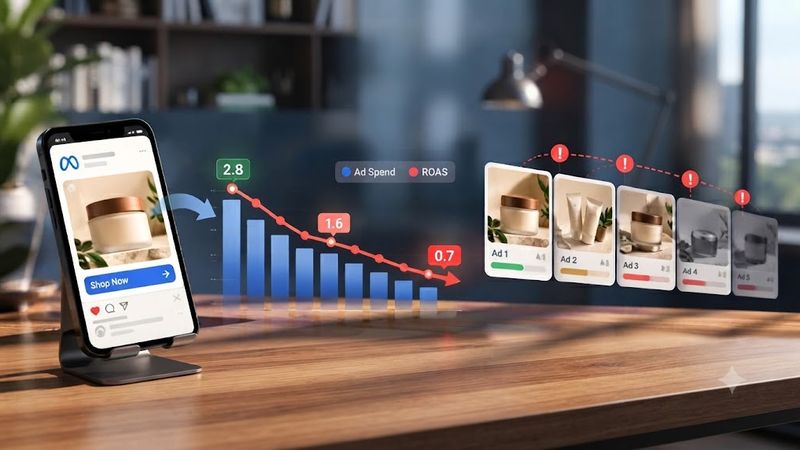
- New-customer ROAS was 1.6x against a break-even of 2.0x. The account was scaling a retention number, not an acquisition one.
- The fix: exclude active subscribers from retargeting and prospecting, rebuild prospecting around the starter bundle, and report new-customer ROAS weekly next to platform ROAS.
- With Meta's existing-customer budget cap removed from Advantage+ campaigns, this pattern is more common than it used to be.
In this case study
The agency's recommendation arrived on a Monday: Meta was running at 3.1x ROAS, comfortably above target, so it was time to double the budget. The supplements brand's founder liked the logic. Revenue was growing, the subscription base was growing, and Meta was the main paid channel. The only hesitation was a nagging feeling that new customer numbers had not grown as fast as the ROAS suggested they should.
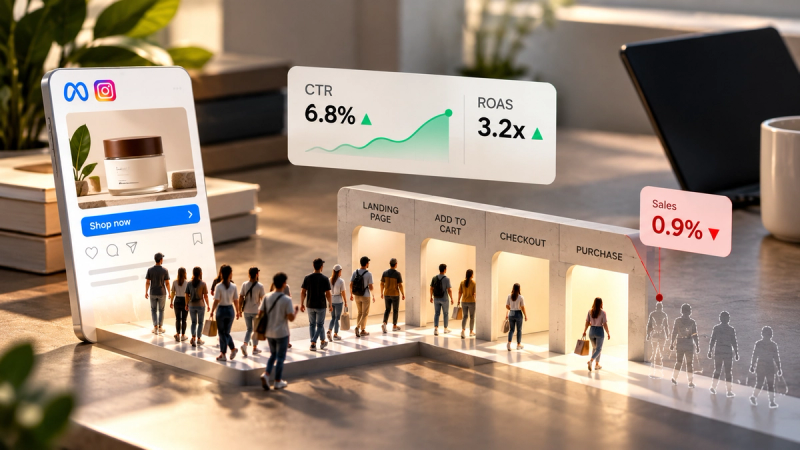
That feeling was right. When Meta's attributed orders were matched to Shopify customer records, a large share of them belonged to people who were already subscribers. Their renewals were scheduled weeks in advance. Many had simply seen a retargeting ad before their box shipped, and Meta counted the renewal as a conversion.
| Category | Supplements, subscription and one-time orders on Shopify |
|---|---|
| Size | About $28K a month in revenue, with a growing subscription base |
| Main channel | Meta, with Advantage+ sales campaigns and retargeting |
| First-order margin | About 50%, so first-order break-even ROAS of 2.0x |
| The question | Should we double Meta spend? |
What the dashboards said
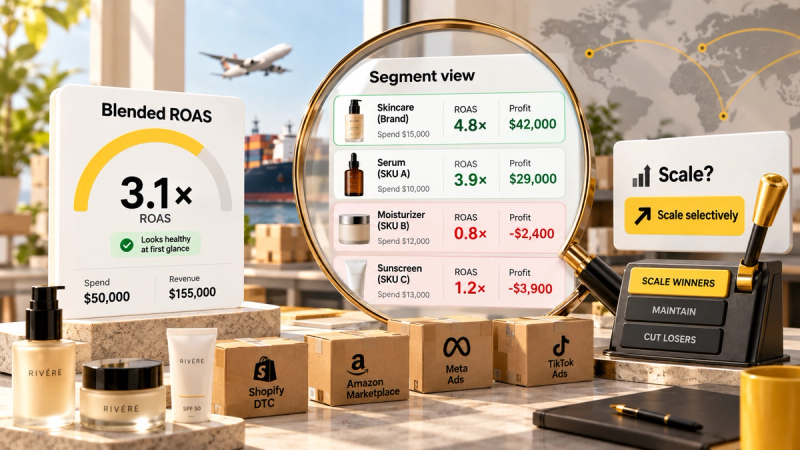
Meta: 3.1x ROAS. Shopify: revenue up month on month. Subscription app: active subscribers growing. Each of those was true. Together they told a story of a healthy acquisition engine. The missing piece was a single split: how much of what Meta claimed came from people who were already customers?
How we connected the data
- Pulled the audience segment breakdown for every Sales campaign in Ads Manager to see spend and purchases by existing customers, engaged audience and new people.
- Exported Shopify orders with customer IDs and the subscription app's order tags, separating first orders, one-time repeat orders and recurring subscription orders.
- Calculated new-customer ROAS: first-order revenue from new customers divided by Meta spend for the same period.
- Compared new-customer ROAS with the first-order break-even, and checked 60-day retention by first offer.
What the connected data showed
Meta-reported ROAS vs new-customer ROAS, against first-order break-even (illustrative)
| Label | ROAS |
|---|---|
| Meta-reported ROAS | 3.1x |
| New-customer ROAS (Shopify first orders) | 1.6x |
Share of Sales campaign spend by audience segment (illustrative)
Illustrative composite. Existing customers also produced a disproportionate share of Meta-attributed purchases.
| Label | Share of spend |
|---|---|
| New people | 46% |
| Existing customers and subscribers | 41% |
| Engaged audience (not yet bought) | 13% |
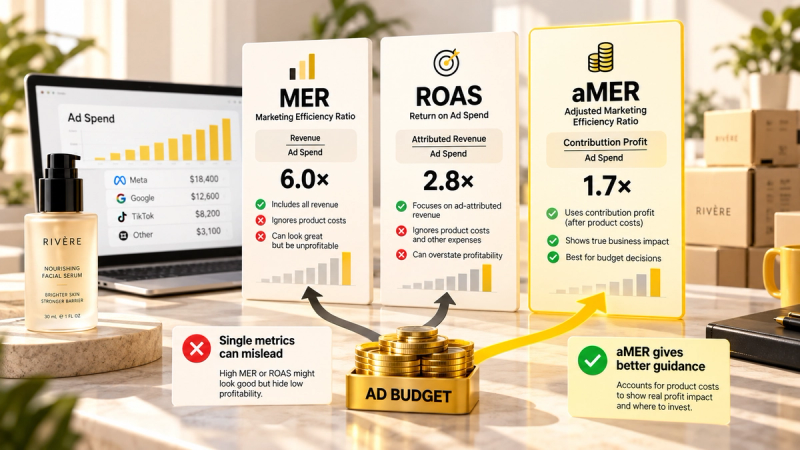
Two in five dollars were going to people who already bought from the brand, most of them subscribers. Their purchases flattered the ROAS. Strip them out, and acquisition was running at 1.6x against a 2.0x break-even: every new customer lost money on the first order. That can be acceptable for a subscription brand, but only if new subscribers stay long enough to pay it back, and only if you know it is happening. Here, nobody did.
One useful finding pointed the way forward. New customers who started with the starter bundle had the best 60-day retention of any first offer. The bundle was a better entry point than the single-product ads the account was running.
Why it was missed
Meta counts any attributed purchase as a conversion. It does not distinguish a renewal that was scheduled three weeks ago from a first order by a stranger. Advantage+ campaigns used to offer an existing-customer budget cap, but Meta has since removed it, so broad campaigns can spend freely on people who already buy from you. Blended ROAS looked strong because the subscriber base was doing the work.
The decision
| Decision | What it meant in practice |
|---|---|
| Stop | Doubling the budget on the strength of a ROAS figure that was partly measuring retention. |
| Fix | Exclude active subscribers and recent customers from retargeting and prospecting audiences. |
| Fix | Rebuild prospecting around the starter bundle, which had the best 60-day retention. |
| Test | Step spend up in 20% increments only while new-customer ROAS and 60-day retention hold. |
| Fix | Report new-customer ROAS weekly next to Meta ROAS, so the gap is visible every week. |
How to check this in your own business
- In Ads Manager, break down your biggest Sales campaign by audience segment. Note the share of spend going to existing customers.
- From Shopify, calculate first-order revenue from new customers for the same month and divide by Meta spend.
- Compare the result with 1 divided by your first-order contribution margin.
For the full method, read why blended ROAS is not a scaling signal, and for subscription-specific maths, subscription churn by cohort. A Blindspot Snapshot runs all of this on your own data and tells you what to scale, fix, test and stop.
Questions founders ask
Why would Meta count subscriber reorders as conversions?
Meta credits any purchase that follows an ad click (or, within its windows, other ad interactions) to the ad. It does not check whether the buyer was an existing subscriber whose renewal was already scheduled. If subscribers see your ads, their renewals can fall inside the attribution window.
How do I see how much Meta spend goes to existing customers?
Set up audience segments in Ads Manager (existing customers and engaged audience) and use the audience segment breakdown on your Sales campaigns. It shows spend and results split between existing customers, engaged audience and new people.
Should subscription brands exclude subscribers from all ads?
From prospecting, almost always. From retargeting, usually, unless you are promoting a genuinely new product to them. Upsell and cross-sell to subscribers is often cheaper and more effective through email, SMS and the subscription portal.
What is a good new-customer ROAS?
One above your first-order break-even (1 divided by first-order contribution margin), or below it only if repeat purchases pay acquisition back inside the time your cash allows. For this brand, with a 50% first-order margin, break-even was 2.0x.
Illustrative case: a composite built from patterns we see in brands at this stage, with details changed. It is not a single named client result.