 FeaturedOperating
Blog and case studies
Growth notes for DTC founders
What we see in US DTC data: ads, margin, retention, products and Amazon. Written for the founder who makes the call.
FeaturedOperatingStart from the problem
What are you trying to figure out?
Pick the question closest to yours. We list the guides and cases that answer it, in reading order.
- My ROAS looks fine, but the business isn't making money6 guides + 2 cases
- Revenue has stopped growing6 guides + 1 case
- Customers buy once and never come back7 guides + 4 cases
- Discounts are eating my margin3 guides + 1 case
- I don't know which ads or channels really work7 guides + 1 case
- Should my next dollar go to Amazon or DTC?2 guides + 1 case
- My costs went up: tariffs, shipping, returns5 guides + 1 case

Your winning Meta ad stopped scaling. Andromeda is probably why.
Meta's Andromeda retrieval system changed who sees your ads. Why one winning creative now saturates faster, what creative diversity really means, and how to scale without burning cash. High CTR, low sales: when your best ad brings the wrong buyers
 Incrementality Testing on a Small Budget: How to Prove Which Ads Actually Work Before You Scale
 MER vs ROAS vs aMER: Which Number Should Actually Decide Your Ad Budget?1.6xCase study · SupplementsThe 3.1x ROAS was mostly subscribers reordering.

How to calculate customer lifetime value on Shopify, and why most LTV numbers are wrong
The LTV formula most brands use overstates value by mixing old loyal customers with new ones. How to calculate cohort LTV on Shopify, in contribution, and use it for real decisions. Cohort analysis for DTC founders: why your cheapest customers cost the most
 Why Your Subscription Churn Is Worse Than Your Dashboard Says (and the Cohort Math That Shows It)
 Are You Training Customers to Wait for a Sale? How to Measure Discount Dependency Before It Eats Your Margin2xCase study · SkincareThe 20% welcome code was training discount buyers.
5 guides
Unit economics
What each order leaves after product, shipping, returns and the ad that sold it.
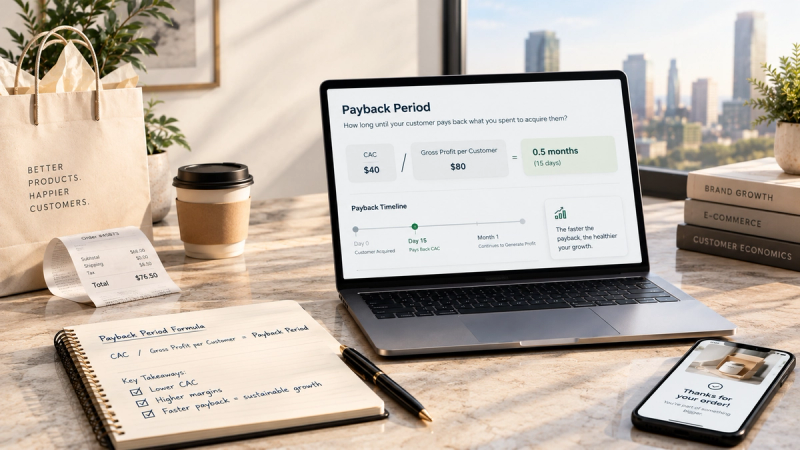
CAC payback period: how long can your DTC brand afford to wait for a customer to pay back?
How long a new customer takes to earn back what you paid to acquire them decides how fast you can grow. The formula, a worked example, and how to set a payback target from your cash.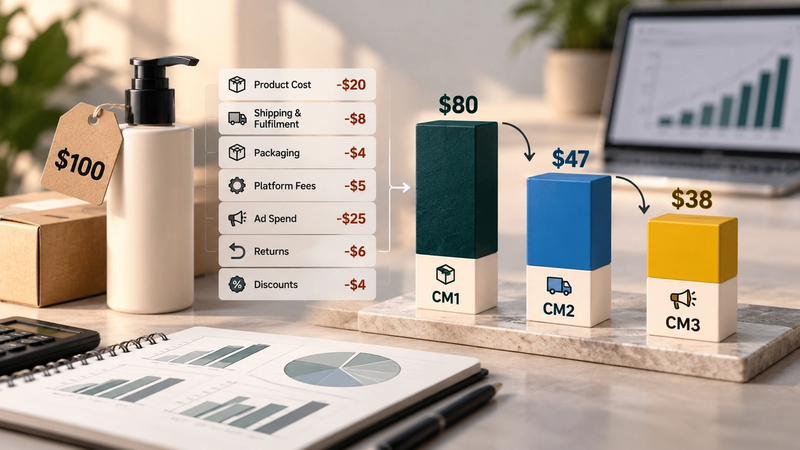 Contribution margin for DTC brands: CM1, CM2, CM3 and the number that decides your ad budget
 Your ROAS looks good. So why isn't the business making money?
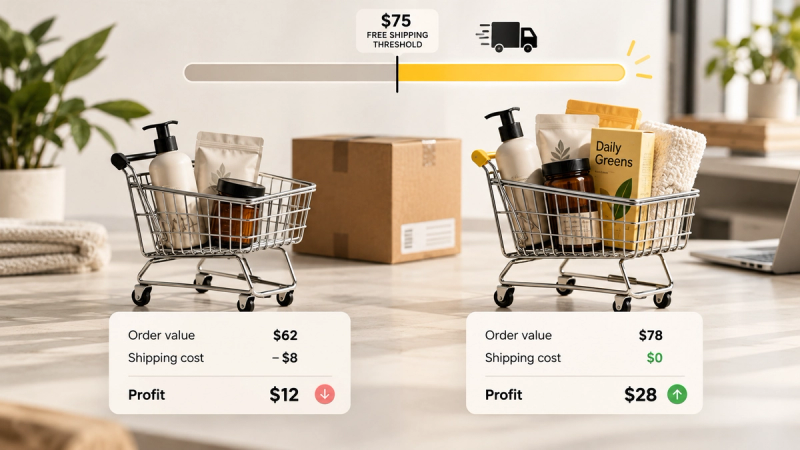 How to Set a Free Shipping Threshold That Raises Profit, Not Just AOV-$4.10Case study · HaircareTikTok Shop added $40K a month in sales. It also lost money on every order.
Case studies
What the dashboard missed
What the tools said, what the connected data showed, and the decision that followed.
80% of ad spend was on the product that ends the relationship.
A pet treats brand was putting most of its ad budget behind its best seller. The buyers of that product rarely came back. The buyers of a smaller product did.The 3.1x ROAS was mostly subscribers reordering.
Meta reported 3.1x ROAS. Once subscriber reorders were separated out, new customer ROAS sat below break-even.The 20% welcome code was training discount buyers.
A 20% welcome code drove most first orders. Customers who paid full price came back at twice the rate.The small box looked cheaper to acquire. It was the most expensive customer.
A subscription food brand scaled ads for its smallest box because it had the lowest cost per purchase. Those subscribers cancelled fastest.One product did the acquiring. The bundle did the profit.
A women’s fitness gear brand relied on one ad and one product. Order data showed bundle buyers were worth far more, and no ad was selling the bundle.Amazon growth was mostly DTC customers switching channels.
A snack brand celebrated Amazon growth while DTC stalled. The two channels were mostly trading the same customers.Cases marked illustrative are composites built from patterns we see at this stage, with details changed.
The full library
All articles and case studies
Showing 12 of 35
The creator campaign showed zero ROAS. It brought in one new customer in six.
A skincare brand nearly cut a creator program that looked like zero ROAS on links and codes. Survey answers and a regional test showed it was driving a large share of new customers through branded search.Meta did not break. The best sellers were out of stock.
A supplements brand saw CPA jump and blamed Meta. The real cause was stockouts on the two products its ads were sending people to.TikTok Shop added $40K a month in sales. It also lost money on every order.
A haircare brand celebrated fast TikTok Shop growth. Once referral fees, creator commissions, fulfilment, returns and GMV Max ads were taken out, each order lost money, and few buyers came back. Operating
How much should a DTC brand spend on marketing? A budget framework by stage
Percentage-of-revenue rules ignore margin, repeat rate and cash. How public DTC brands actually spend, and a stage-by-stage way to set your own marketing budget from contribution and payback.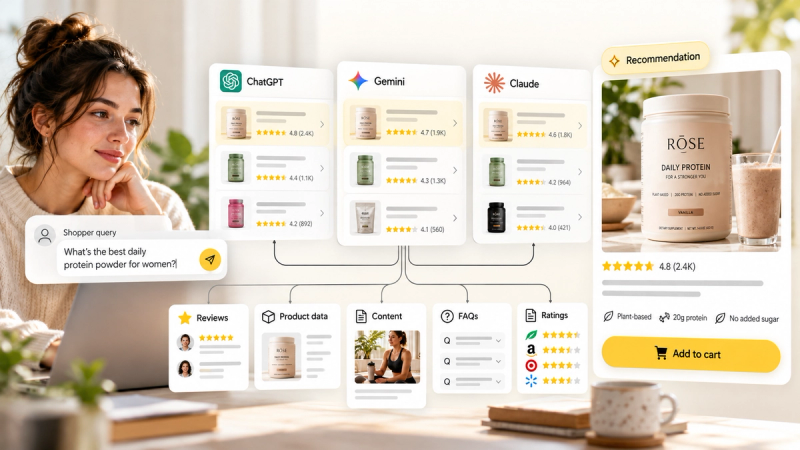 Measurement
How DTC brands get recommended by ChatGPT, Gemini and other AI assistants
Shoppers now ask AI assistants what to buy. What we know in 2026 about how products get surfaced, what happened to in-chat checkout, and the data, content and reviews that help.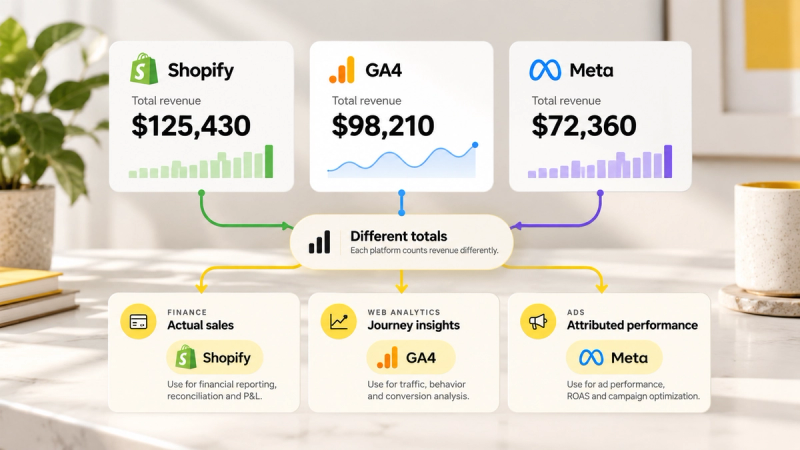 Measurement
Why Shopify, GA4 and Meta never show the same revenue, and which number to trust
Shopify, GA4 and Meta each count sales differently, so their revenue never agrees. What each one measures, how big the gaps usually are, and which number to use for which decision.Retention & LTVHow to calculate customer lifetime value on Shopify, and why most LTV numbers are wrong
The LTV formula most brands use overstates value by mixing old loyal customers with new ones. How to calculate cohort LTV on Shopify, in contribution, and use it for real decisions.Unit economicsCAC payback period: how long can your DTC brand afford to wait for a customer to pay back?
How long a new customer takes to earn back what you paid to acquire them decides how fast you can grow. The formula, a worked example, and how to set a payback target from your cash.Unit economicsContribution margin for DTC brands: CM1, CM2, CM3 and the number that decides your ad budget
Gross margin hides shipping, fees, returns and discounts. How to calculate CM1, CM2 and CM3 for an ecommerce brand, with a worked P&L, and why CM2 should set your ad budget.Ads & ROASYour winning Meta ad stopped scaling. Andromeda is probably why.
Meta's Andromeda retrieval system changed who sees your ads. Why one winning creative now saturates faster, what creative diversity really means, and how to scale without burning cash.Unit economicsYour ROAS looks good. So why isn't the business making money?
A 3x ROAS can make money on one product and lose it on another. How to calculate break-even ROAS for every SKU, what a sale does to the math, and where to move budget.Ads & ROASHigh CTR, low sales: when your best ad brings the wrong buyers
A high CTR means people liked the ad, not that they wanted to buy. Why clicks got easier and sales got harder in 2026, and how to rank creatives by profit per click. Products
Your best seller might be a dead end: how to find your gateway product
Your best seller brings volume. A quieter product usually brings the customers who stay. How to find your gateway product, why ads hide it, and how to build offers around it. Measurement
"How Did You Hear About Us?" The One Checkout Question That Shows What Your Attribution Can't
Podcasts, creators, word of mouth and AI assistants rarely show up in click-based attribution. How to design a post-purchase survey, read it without bias and use it to set budgets.Retention & LTVCohort analysis for DTC founders: why your cheapest customers cost the most
The channel with the cheapest CAC often has the slowest payback. How to build cohorts by channel and offer, measure payback in contribution, and spot leaking influencer codes.Unit economicsHow to Set a Free Shipping Threshold That Raises Profit, Not Just AOV
Most free shipping thresholds are copied from competitors. How to set yours from your order value distribution, real shipping costs and margin, and the sales tax twist. Operating
Why DTC brands plateau, and how to find your reason
Most DTC plateaus start two or three quarters before revenue flattens. How to split new and returning revenue, check platform claims against Shopify, and find the line that turned first.Retention & LTVWhy Your Subscription Churn Is Worse Than Your Dashboard Says (and the Cohort Math That Shows It)
A healthy 6% monthly churn can hide new subscribers leaving at 30% before their second box. How to read churn by cohort, pauses, failed payments and first-order offers.Retention & LTVAre You Training Customers to Wait for a Sale? How to Measure Discount Dependency Before It Eats Your Margin
If most repeat orders only happen during promotions, your retention is being paid for with margin. Five numbers that show discount dependency and how to reduce it safely. Unit economics
Your Best-Selling Product Might Be Losing Money After Returns. Here's How to Check Every SKU
A return costs far more than the refund. How to calculate the true cost of a return, your return-adjusted break-even ROAS by SKU and channel, and what to fix first.Ads & ROASIncrementality Testing on a Small Budget: How to Prove Which Ads Actually Work Before You Scale
You do not need a seven-figure budget to find out whether your ads cause sales. Geo holdouts, scale tests and flow splits that work for brands under $500k a month. Cash, supply chain & tax
Tariffs, De Minimis and Landed Cost in 2026: Recalculate Break-Even ROAS for Every SKU Before Your Next Reorder
US tariffs changed four times in 18 months, and many costing sheets are now wrong in both directions. How to rebuild landed cost, reset ROAS targets and claim money back. Retention & LTV
Klaviyo Says Email Drives 30% of Your Revenue. Here's How Much It Really Does
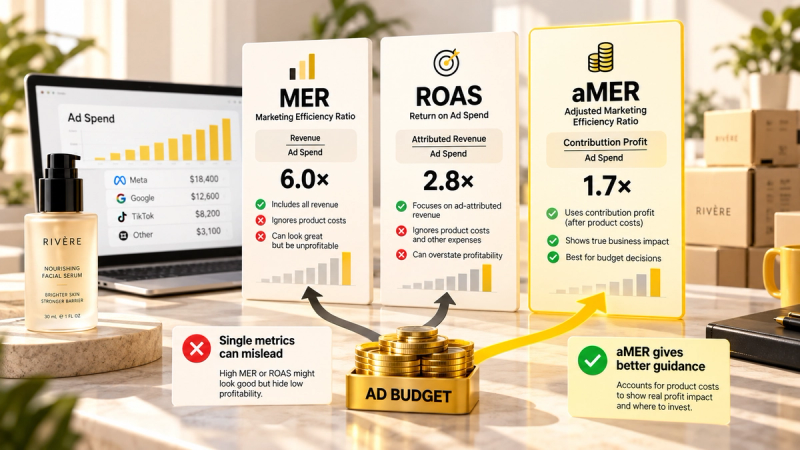
Klaviyo counts sales that would have happened anyway. How attribution inflates email revenue, how to run a holdout on any list size, and what to change once you know.Ads & ROASMER vs ROAS vs aMER: Which Number Should Actually Decide Your Ad Budget?
ROAS can rise while the business shrinks, and MER can look healthy while acquisition quietly fails. How to read ROAS, MER and aMER together, with break-even math. Amazon
The Amazon Halo Effect: How Much of Your Amazon Sales Are Really Coming From Your Meta Ads?
Meta and YouTube ads sell on Amazon too, and none of it shows in your ROAS. How to measure the halo, value it after Amazon fees, and decide where to send your traffic.Amazon growth was mostly DTC customers switching channels.
A snack brand celebrated Amazon growth while DTC stalled. The two channels were mostly trading the same customers.One product did the acquiring. The bundle did the profit.
A women’s fitness gear brand relied on one ad and one product. Order data showed bundle buyers were worth far more, and no ad was selling the bundle.The small box looked cheaper to acquire. It was the most expensive customer.
A subscription food brand scaled ads for its smallest box because it had the lowest cost per purchase. Those subscribers cancelled fastest.80% of ad spend was on the product that ends the relationship.
A pet treats brand was putting most of its ad budget behind its best seller. The buyers of that product rarely came back. The buyers of a smaller product did.The 3.1x ROAS was mostly subscribers reordering.
Meta reported 3.1x ROAS. Once subscriber reorders were separated out, new customer ROAS sat below break-even.The 20% welcome code was training discount buyers.
A 20% welcome code drove most first orders. Customers who paid full price came back at twice the rate. Amazon
 or DTC: which channel deserves your next dollar
Both channel dashboards can look healthy while the brand stands still. Compare contribution per order, new customers in total, branded search share and TACoS to decide where to invest. Retention & LTV
Is your welcome discount building customers or bargain hunters?
Welcome codes lift first orders, but research and cohort data show the cost lands 60 to 90 days later. How to test yours, what it really costs, and five alternatives that keep margin. Products
The first product a customer buys decides what they are worth
Shopify ranks products by sales, not by the customers they create. How to measure 90-day value by first product, read the product path, and pick what your ads should sell. Ads & ROAS